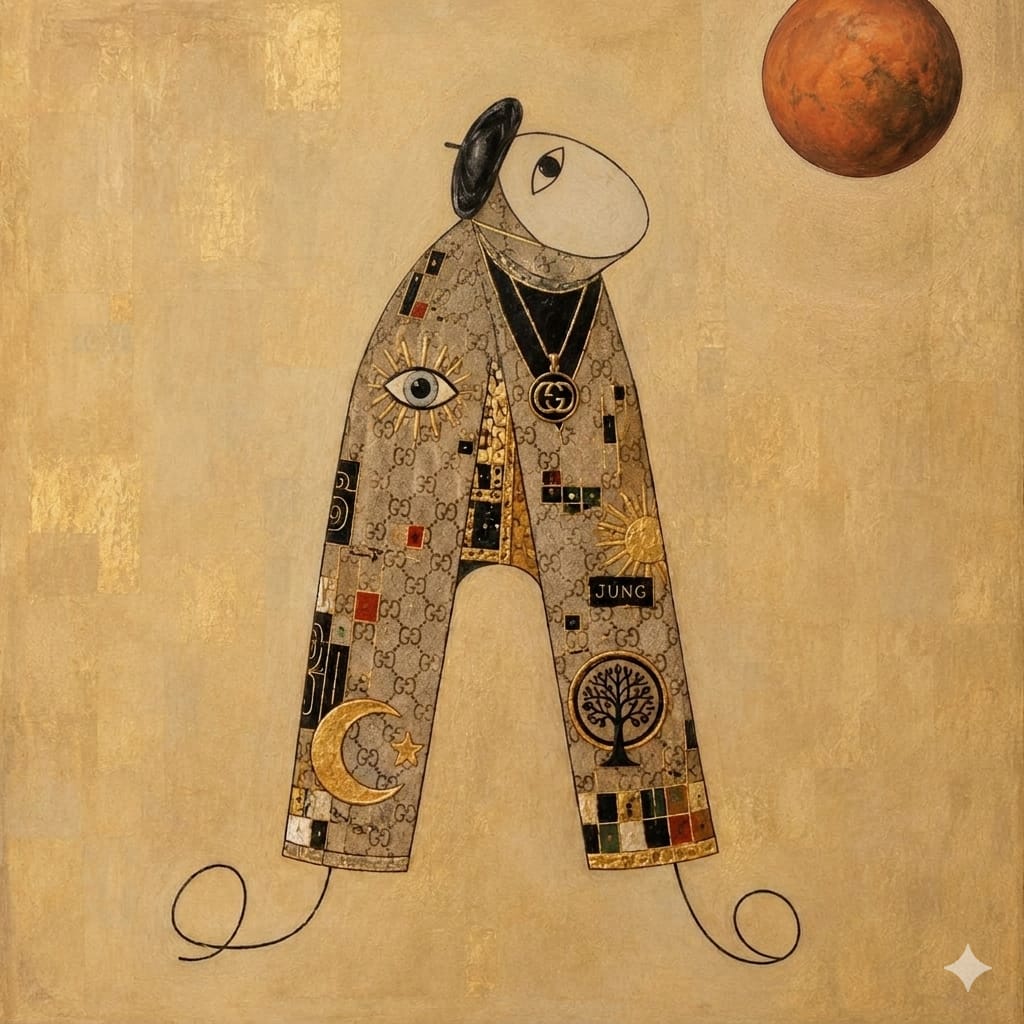
Start with the pair already forming.
Artiji is building a human-first pre-mortem for cofounders who
want a clearer look at pressure, cadence, friction, and what
each person carries into the room.
Jyotish gives the vocabulary. The work is structured reflection,
not prophecy. The chart conditions how that reflection is
framed, never the outcome.
// for high-agency people under uncertainty
Your natal chart’s core signal — dominant planet, nakshatra (lunar mansion), and one timing note. The lightest entry into the pattern.
Full chart analysis with divisional charts, dasha (life-phase cadence) timing, and temperament notes — the complete pattern map for a founder.
The company’s incorporation date read as a chart. Launch conditions, structural strengths, and the timing cycles the entity runs on — read on its own, not against a founder.
Chart analysis scoped to a decision window — company launch, product launch, raise, or feature ship — with dasha (life-phase cadence) and transit overlay for the key dates.
Two founders read together. Where you align, where you grind, and what the timing suggests for the decisions you face as a pair. Works for a founder read alongside their company’s start date.
Three people read as one system. Every pair analyzed, plus a composite of how the three of you hold together.
When the birth time is exact, Artiji can work with the full frame: divisional charts such as D9 and D10, angular strength, and dasha (life-phase cadence) timing windows. The output becomes a pattern map for the partnership, with specific fault lines and supports to watch.
When the time is a range, Artiji can test what remains stable across possible ascendants. The strongest material usually comes from behavioral compatibility, Saturn and Mars pressure, Mercury and Jupiter style, Sun-Moon interplay, nakshatra (lunar mansion) texture, and dasha (life-phase cadence) alignment from natal placements.
Date-only work is lighter by design. Artiji can still surface nakshatra-based temperament notes, reflective prompts, and founder questions worth naming early. This tier is context, not prediction.
Artiji begins with cofounder pairs who are already leaning toward yes. The point is not romance, destiny, or a final answer. The point is to surface what each person carries into the build before the strain of a real company makes the pattern expensive.
Jyotish supplies the grammar: lagna (ascendant), grahas (planets), nakshatra (lunar mansion), dasha (life-phase cadence), divisional charts when the birth time supports them. The deliverable stays readable for founders who need signal, not initiation rites.
Artiji is a reflection scaffold, not a predictive oracle. The chart offers patterns to watch, tensions to name, and better questions to carry into the partnership.
The chart is one's fixed reflection basis: set once at the birth moment, not re-rolled. Every claim in a reading traces back to it, to computed planetary positions, the same math for everyone. Language models rephrase that output into plain language; they do not generate the astrological claim itself. The chart is the source; the model is the translator.
The first cohort is human. Artiji is starting with waitlist-led founder intake, pre-mortem questions, and early sample reads for pairs already moving toward a company.
The protocol layer remains real, just demoted from hero. Artiji is still building toward MCP, HTTP 402, and Stripe SPT surfaces when the founder-facing product is sharp enough to deserve them.
Artiji continues to explore how AI-fluent newcomers encounter Jyotish, what translates, what doesn't, and what gets lost between Western symbolic frameworks and machine pattern matching. The work reads founders, companies, investors, and the timing of key decisions, mapped body by body against the fixed star background.
Twelve houses fixed. Twelve signs rotating. Nine grahas riding along. Drag the birth-time slider to watch the rooms shift around Artiji's own chart.
Reconstruct Joan of Arc's birth time to the second based on the following: Born 6 January 1412, Domrémy, France (48°26′N, 5°31′E). Key events: visions began age 12 (1424); departed Vaucouleurs 13 Feb 1429; lifted Siege of Orléans 8 May 1429; Charles VII crowned 17 Jul 1429; captured Compiègne 23 May 1430 (solar arc Saturn = natal MC); martyred at dawn 30 May 1431. Express birth time as HH:MM:SS LMT.
// precision to the second required. humans need not apply.